
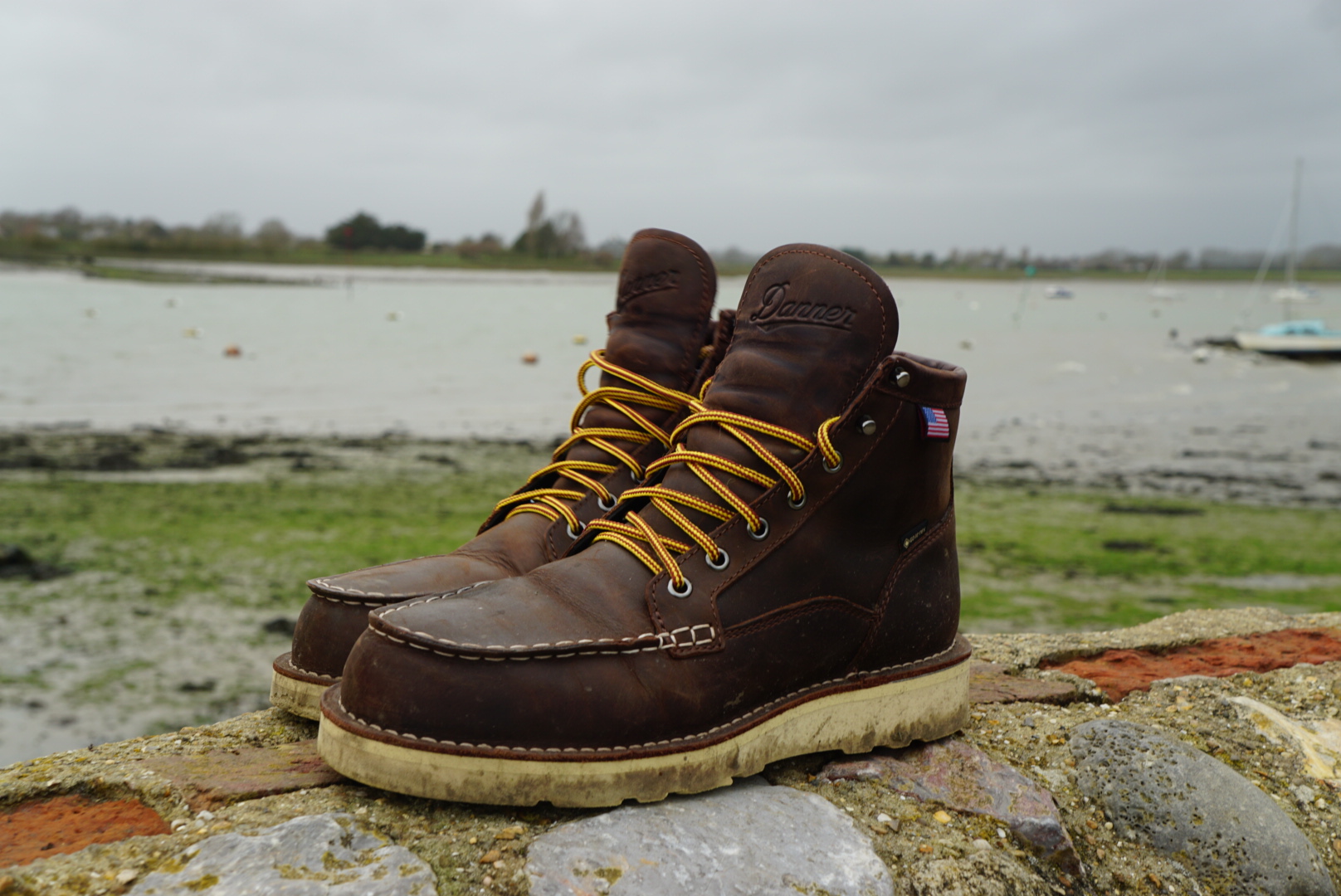
We’re already big fans of the Danner Bull Run here at GS, but if you’re after a little extra performance in typically British conditions, then the GTX version could be the answer. It’s designed as an even more robust version of the popular Bull Run, introducing a Gore-Tex liner for extra wet-weather protection.

We’re also testing the Bull Run GTX with a hardened steel toe cap design incorporated into it, which could help push it towards those in building trades or those who need to keep their feet protected when on the move. It’s all wrapped up in the same great Bull Run design that we’ve found quite appealing, but does the switch to GTX change its overall usability? That’s what we’ve been finding out.
Sphere Score
For
- Extra protection helps in poor conditions
- Steel toes keep feet safe
- Comfortable under foot
- Same great design
Against
- Harder break-in period than standard boots
- Not as flexible because of liner
- Toe gusset can feel quite sharp to begin with
- Expensive
Tech specs
- Price: £265
- Full Gore-Tex protection
- Full-grain leather upper
- Electrical hazard rated
- Removable Ortholite footbed
- Replaceable sole
What does the Danner Bull Run GTX have to offer?
From the outside, you might not think that much has changed in the Bull Run’s transition to GTX. However, it’s underneath where the big edits have taken place. Most importantly, there’s now a full Gore-Tex liner, which brings full waterproofing while still remaining breathable. It’s the biggest difference between the GTX and the standard Bull Run which, while robust, will still let water in after long enough.

There’s the same ankle-height design as the regular Bull Run, too, though sadly, there’s no eight-inch option for those who want some additional support. As mentioned earlier, you can get the Bull Run with or without a safety toe, with the latter bringing a full steel safety toe which conforms to all major regulations. Up top, there’s a full-grain leather upper matched to a non-marking wedge outsole. This latter feature is made entirely from flexible polyurethane for better comfort over long periods, while a removable OrthoLite footbed takes things one step further. Again, this footbed is made from polyurethane, just like the outsole.
Available in both medium and wide widths, the Bull Run GTX is only available in a single colour option, though it’s also possible to specify it with a heeled outsole. At just over 1.5kg per pair, the Danner Bull Run GTX sure isn’t a featherweight, but then this type of boot isn’t designed with overall lightness in mind. Switch to the standard non-safety toe version and this falls back to a still-chunky 1.44kg.

As with other Danner products, the Bull Run GTX is made in the USA, albeit with imported products that are assembled overseas before being put together and completed in America. The good news is that the GTX is also recraftable, meaning that once the soles are worn out it should – in theory – be simple enough to switch them out for new ones.
Wearing – what is the Danner Bull Run GTX like?
Straight off the bat, there’s quite a difference between standard Bull Run and the GTX. Because of that Gore-Tex liner, things are more rigid to begin with, so whereas the regular Bull Run feels comfortable and light out of the box, it’s not quite the same story with the GTX. We didn’t feel as confident to partake in a big hike right away in the GTX, whereas the standard boot felt much more comfortable and didn’t require a break-in period whatsoever. With the GTX, we also found that the ridged areas at either side of the tongue dug into our feet initially, though they eased up as we covered the miles.

As with a lot of full-leather boots, the Danner Bull Run GTX have eased up over time. The flexible outsole provides a lot of bounce-back and comfort and it’s much easier to do larger distances in them now. As for that added Gore-Tex protection, it makes a huge difference. We’ve worn the Bull Run GTXs in some fiercely wet conditions and suffered no signs of wet feet, or even the smallest amount of water getting in from outside. There’s even good protection up through the laces, with that aforementioned gusset section meaning that there’s a water-repelling overlap to help keep things dry and toasty.
There’s a nice, sturdy feeling to the boot overall and the full-grain leather for the upper has started to patina as we’ve started wearing them in. With leather, you’ll need to keep on top of care to keep it in its best condition, but that’s a worthy trade-off for the protection that it’ll give over time. We like that you can get these boots resoled if you need to, and though Danner offers its own service for this, you could have a specialist do it instead.

There doesn’t seem to be much sacrifice in comfort with this steel-toed version, either. Naturally, there’s less flex in the toe box – it is steel, after all – but it has been well integrated and doesn’t stand proud at any time.

If you’re after a comfortable workwear boot that’ll get you through the whole day without any issues, then this steel-toed version of the Bull Run could be right for you. The GTX model will be particularly handy for those who spend a lot of time outdoors, too.
In terms of sizing, we learnt from previous Danner boots and went on-the-nose with a true-to-fit choice. A size 9 gave us enough wiggle room in the toe box and felt a lot more comfortable than the 8.5 we’d tried in other Bull Run models.
To finish
The Danner Bull Run GTX feels like a fitting upgrade to the standard boot. For sure, if you don’t need the added weather protection and would like a little extra comfort, then the regular Bull Run will more than fit the bill.
However, if you’re spending more time outdoors or experience the best of what the UK’s weather has to offer on a frequent basis, then we’d be looking towards this more wet-weather-ready GTX version. The option of a steel toe means tradespeople and those who need better foot protection have a great choice in the Bull Run GTX, too.


Leave a Reply